WALL·E
Vibe
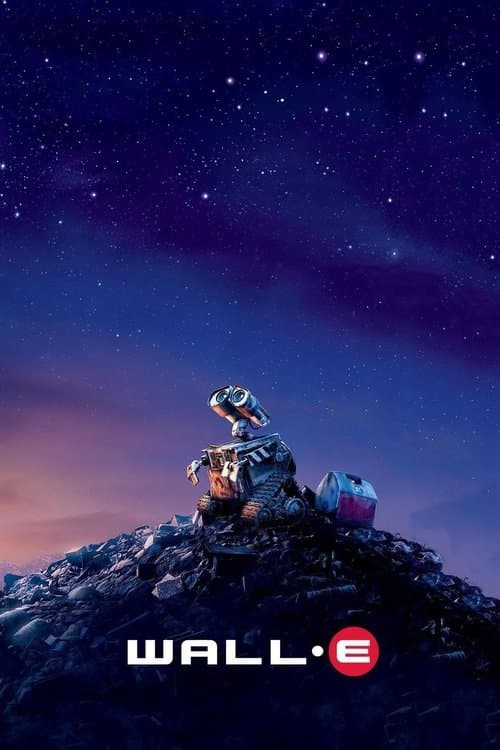
Andrew Stanton’s quietly ambitious sci-fi romance follows WALL·E, a solitary waste-collecting robot left behind on a deserted Earth centuries after humanity has abandoned the planet. Spending his days compacting trash and collecting small artifacts of human life, WALL·E’s routine is transformed by the arrival of EVE, a sleek probe sent to search for signs of life. As their connection grows, the story expands from intimate character study to a larger journey that reaches the stars, revealing the consequences of human excess and neglect. With minimal dialogue and expressive visual storytelling, the film blends tenderness, humor, and social commentary. WALL·E becomes both a love story and a meditation on loneliness, responsibility, and the possibility of renewal.
Watch for
- WALL·E’s early routines on Earth, which establish character through behavior rather than exposition.
- The contrast between the quiet, desolate planet and the sterile, automated environment of the Axiom.
- The evolving relationship between WALL·E and EVE, communicated through gesture and movement.
- The film’s visual storytelling techniques, particularly in sequences with little to no dialogue.
Production notes
WALL·E was Andrew Stanton's third Pixar feature as director, and the most structurally daring film the studio had attempted: its first 39 minutes contain almost no dialogue. Stanton developed the project across roughly seven years, drawing on silent-film comedy (Buster Keaton, Charlie Chaplin), sound designer Ben Burtt's Star Wars work, and an environmental sensibility informed by anxieties about consumption and waste. Burtt himself voiced WALL·E and EVE through synthesized vocalizations rather than scripted dialogue, treating the robot voices as instruments rather than performances. The film's live-action segments — featuring Fred Willard as the BNL CEO — made WALL·E the first Pixar film with live human actors integrated into the narrative. Thomas Newman composed the score. Production cost approximately $180 million and the film required custom rendering techniques for the photorealistic Earth landscapes and the scope-style space photography.
Trivia
- Ben Burtt — the sound designer responsible for R2-D2's voice in Star Wars and the lightsaber sound effects — voiced both WALL·E and EVE using synthesized vocalizations rather than scripted dialogue, essentially building their 'language' from emotional sounds rather than words.
- The film's first 39 minutes contain almost no dialogue; Andrew Stanton specifically modeled the narrative on silent-film conventions and drew on Buster Keaton's physical comedy for WALL·E's gestural performance.
- WALL·E is the only Pixar film to integrate live-action human characters with animated CGI characters in a substantial narrative role; the BNL infomercials feature Fred Willard performing as the historical CEO Shelby Forthright.
- Andrew Stanton intended the film as an environmental allegory but resisted on-the-nose climate messaging; the satellite footage of Earth covered in trash was carefully designed to be recognizable without being pedantic.
- The film's romance between WALL·E and EVE — communicated almost entirely through gesture and the synthesized chirp of their names — has been called one of the great love stories in animation, and is regularly used in film theory courses to teach visual storytelling.
Legacy
WALL·E demonstrates Pixar's confidence in pure visual storytelling, relying on silence, movement, and expression rather than dialogue across nearly half its runtime — and proving that an animated film could be commercially successful while operating in art-house formal territory. It grossed approximately $521 million worldwide and won the Academy Award for Best Animated Feature, with five additional nominations including Best Original Screenplay. The film entered the National Film Registry in 2021 and the AFI Top 10 Animated Films list. Critics across the board treated WALL·E as a serious cinematic achievement rather than as a children's entertainment, and writers including Frank Rich and Roger Ebert wrote extensively about its political and environmental dimensions. The film's depiction of a hyperconsumerist future — Buy 'n Large dominating every aspect of life, humans grown soft on chairs — has aged into prophecy more than allegory. WALL·E and EVE joined Pixar's character roster as enduringly beloved figures, and the film remains one of the studio's most-cited art-cinema achievements.