Up
Vibe
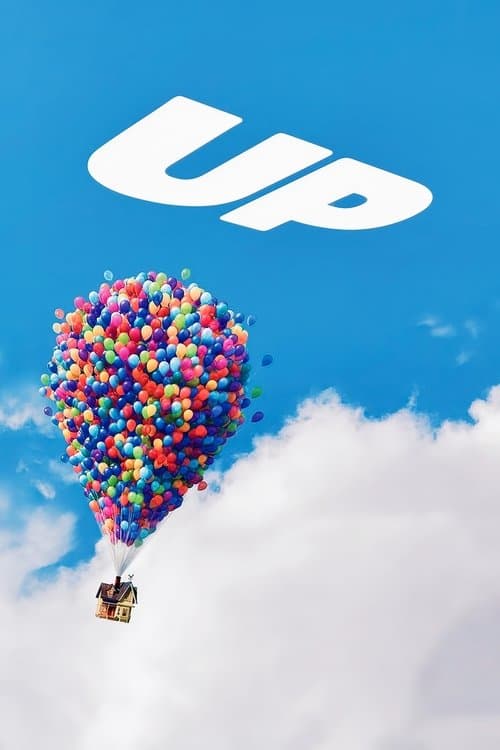
Pete Docter’s emotionally resonant adventure follows Carl Fredricksen, a widowed balloon salesman who fulfills a lifelong dream by lifting his house into the sky and setting course for South America, hoping to honor the memory of his late wife Ellie. His solitary journey is unexpectedly complicated by Russell, an earnest young Wilderness Explorer who becomes an unlikely companion. As the pair encounter new friends and dangers in a remote jungle, Carl is forced to confront the difference between holding onto the past and embracing new connections. Blending whimsical fantasy with grounded emotion, the film moves seamlessly from quiet reflection to high adventure. Up becomes a story about grief, renewal, and the courage to keep moving forward.
Watch for
- The opening montage of Carl and Ellie’s life together, establishing the emotional foundation of the film.
- Carl’s evolving relationship with Russell, which shifts from reluctant tolerance to genuine connection.
- The contrast between Carl’s attachment to the past and the new experiences unfolding around him.
- The symbolic use of the house, representing both memory and the weight Carl must eventually let go.
Production notes
Up was Pete Docter's second feature as director, after Monsters, Inc. The film's distinctive opening — the silent 'Married Life' montage compressing Carl and Ellie's life together into roughly four minutes — was developed early in production and became the film's emotional anchor and its most discussed sequence. Docter and co-director Bob Peterson took multiple research trips to South America, including visits to the tepui formations in Venezuela that inspired Paradise Falls, and developed techniques for animating thousands of balloons as a single coherent visual element. Edward Asner voiced Carl Fredricksen, Christopher Plummer played the villain Charles Muntz, and Jordan Nagai (cast at age 8) played Russell. Composer Michael Giacchino contributed his second major Pixar score, and the 'Married Life' theme has become one of the most recognizable pieces of music in any Pixar film. The film cost approximately $175 million.
Trivia
- The 'Married Life' montage — the film's silent four-minute opening that compresses Carl and Ellie's life together — has been studied in film schools as one of the most efficient pieces of emotional storytelling ever produced, with multiple academic papers analyzing its structure.
- Russell was modeled on Pixar story artist Peter Sohn, who would later direct The Good Dinosaur and Elemental; Sohn's gestures, posture, and energy directly shaped the character's design.
- Up was the first animated film to open the Cannes Film Festival, screening out of competition in May 2009 — a watershed moment of recognition for animated features in the most prestigious arthouse context.
- Christopher Plummer's villain Charles Muntz was Pixar's most morally complex antagonist to that point — the broken hero, not a simple bad guy — and his voice work shaped the character's deeply tragic dimension.
- The thousands of balloons that lift Carl's house were animated using a custom system; in the film, the actual quantity is approximately 20,622 balloons, calculated to provide enough lift for the depicted house weight.
Legacy
Up showcases Pixar's growing emotional ambition, blending whimsy and adventure with profound meditations on grief, aging, and finding purpose late in life — and it became the first animated film since Beauty and the Beast (1991) to be nominated for the Academy Award for Best Picture, an honor only made possible by the Academy's 2009 expansion of the category. It grossed about $735 million worldwide and won two Academy Awards (Best Animated Feature, Best Original Score for Michael Giacchino), with three additional nominations. The film entered the National Film Registry in 2020 and the AFI Top 10 Animated Films list. The opening 'Married Life' sequence has become arguably the most-discussed animated set piece of the 21st century — referenced in television, film, advertising, and popular culture as a shorthand for compressed emotional storytelling. Carl, Russell, and Dug entered Pixar's permanent character roster, and the film's central image — a small house lifted by balloons — has become one of the most-licensed and most-imitated visual concepts in animation history.