Toy Story 2
Vibe
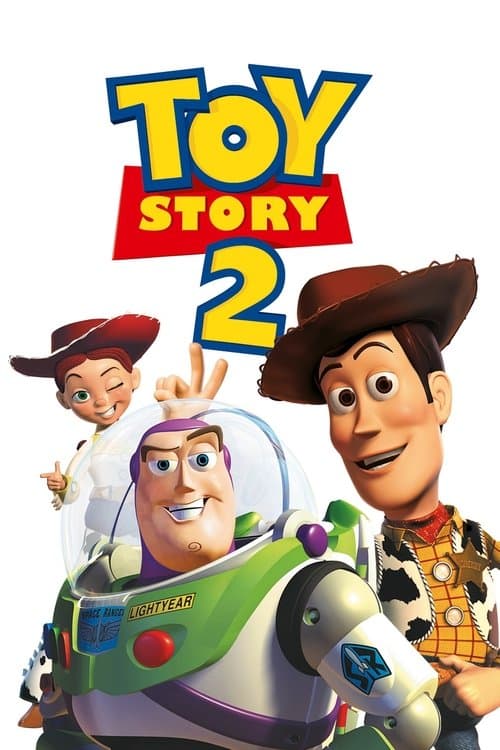
Pixar’s sequel deepens the story of Woody, who is accidentally stolen by a toy collector and discovers he was once the star of a beloved 1950s television show, complete with a new cast of companions who see him as a cultural icon. As Buzz Lightyear and the gang set out on a daring rescue mission, Woody is forced to confront a difficult choice between returning to Andy and embracing a life of preservation and admiration in a museum. Directed by John Lasseter, the film expands its world with richer character dynamics and sharper emotional stakes, balancing humor and adventure with a thoughtful meditation on purpose, belonging, and the passage of time. Toy Story 2 stands as one of Pixar’s most mature and resonant sequels.
Watch for
- Woody’s interactions with Jessie and Stinky Pete, which present contrasting perspectives on abandonment and belonging.
- Jessie’s backstory sequence, which adds emotional weight and expands the film’s themes of loss and memory.
- The parallel rescue mission led by Buzz, blending action, humor, and character-driven storytelling.
- Woody’s final decision, where questions of identity, loyalty, and purpose come fully into focus.
Production notes
Toy Story 2 was originally green-lit as a 60-minute direct-to-video sequel, expected to be a modest franchise extension. As production progressed, Disney pushed for it to become a full theatrical feature — and by the time the upgrade was approved, much of the work had to be redone. Director John Lasseter took over from the original directors Ash Brannon and Lee Unkrich (who became co-directors), and the team reworked the entire third act. In the middle of production, an animator accidentally ran a deletion command on the master Toy Story 2 directory, and a faulty backup system meant the entire film was nearly lost forever. Technical director Galyn Susman, who had been working from home with her newborn, discovered she had an offline copy on her home workstation that saved the production. Tom Hanks, Tim Allen, and the original cast returned, with Joan Cusack joining as Jessie.
Trivia
- Toy Story 2 was nearly destroyed when an animator accidentally ran an 'rm -rf' deletion command on the master directory; Pixar's backup system had been failing silently for weeks, and the film was only recovered because Galyn Susman had taken a copy home to work on while caring for her newborn.
- Joan Cusack's Jessie was added to the film late in development, and the song 'When She Loved Me' (sung by Sarah McLachlan) was written specifically to give the character emotional depth; Randy Newman's lyrics earned an Academy Award nomination for Best Original Song.
- The film was released just four years after the original Toy Story but features a substantially more complex cast — over 70 toy characters appear in the climactic airport sequence alone.
- Toy Story 2 was the first sequel to receive higher critical reviews than its original on Rotten Tomatoes, and is widely cited as one of the greatest animated sequels ever made.
- When director John Lasseter took over production from Ash Brannon and Lee Unkrich, the team had nine months to complete what would have been an 18-month overhaul; the breakneck schedule contributed to widespread reports of crunch and burnout that have shaped Pixar's labor practices since.
Legacy
Toy Story 2 demonstrated that Pixar could match its own original with a sequel of equal or greater ambition — a lesson that reshaped how the entire animation industry approached follow-up films. Its $497 million worldwide gross outperformed the original, and its critical reception was unprecedented for an animated sequel. The film received an Academy Award nomination for Best Original Song ('When She Loved Me'), Golden Globe nominations, and is regularly listed among the greatest animated films ever made. The film's emotional heft — particularly Jessie's backstory in 'When She Loved Me' — proved Pixar could deliver dramatic weight unimaginable in earlier studio sequel work. Its near-disaster deletion incident has become animation industry folklore, cited at every digital studio as the case study for backup discipline. The franchise it confirmed has grown to encompass three additional features (Toy Story 3, 4, and the upcoming 5), countless short films, theme park attractions, and a permanent place in childhood iconography.