Inside Out 2
Vibe
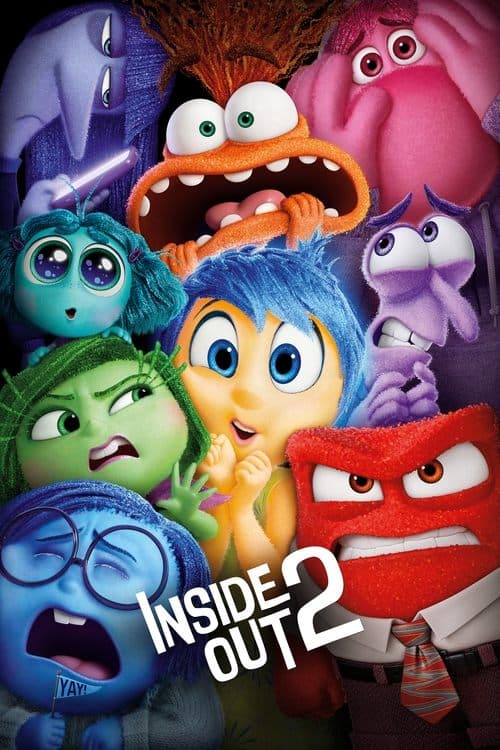
Pixar’s sequel returns to the mind of Riley as she enters adolescence, introducing a new wave of emotions—most notably Anxiety—that disrupt the balance once maintained by Joy, Sadness, and the original core. As Riley navigates the pressures of identity, social belonging, and self-image, her inner world becomes increasingly complex, reflecting the turbulence of growing up. When Anxiety begins to take control in an effort to protect Riley’s future, the emotional system is pushed to its limits, forcing a reevaluation of what it means to truly support her. Directed by Kelsey Mann, the film expands its imaginative framework while deepening its psychological focus. Inside Out 2 becomes a story about self-acceptance, inner conflict, and the challenge of finding balance in a changing sense of self.
Watch for
- The introduction and influence of Anxiety, reshaping the dynamics within Riley’s mind.
- The evolving role of the original emotions as they adapt to a more complex emotional landscape.
- The depiction of Riley’s shifting sense of identity, particularly through her memories and self-perception.
- The moments of emotional reconciliation, where balance and understanding begin to emerge.
Production notes
Inside Out 2 was directed by Kelsey Mann in his feature directorial debut, after years as a Pixar story artist; series creator Pete Docter remained as executive producer. The sequel returned to Riley as she enters adolescence, introducing a new wave of emotions led by Anxiety (Maya Hawke), with Embarrassment (Paul Walter Hauser), Envy (Ayo Edebiri), and Ennui (Adèle Exarchopoulos) joining the expanded cast. Amy Poehler returned as Joy, with Phyllis Smith as Sadness, Lewis Black as Anger, Tony Hale taking over Fear from Bill Hader, and Liza Lapira replacing Mindy Kaling as Disgust. The production took approximately five years and consulted with adolescent psychology specialists throughout development. The film cost approximately $200 million. Released theatrically on June 14, 2024 — the first Pixar feature to receive a full traditional theatrical release after the COVID-19 streaming-first era of Soul, Luca, and Turning Red.
Trivia
- Inside Out 2 became Pixar's highest-grossing film ever and the highest-grossing animated film of all time at its release, ultimately earning over $1.69 billion worldwide and surpassing Frozen 2's previous record before being itself surpassed by Zootopia 2 in 2025.
- Maya Hawke's Anxiety became a breakout character whose chaotic energy resonated particularly with Gen Z viewers; clips of Anxiety's takeover of Riley's mind became some of the most-shared animated content of 2024, with widespread mental-health-awareness applications.
- Bill Hader (the original Fear) and Mindy Kaling (the original Disgust) both declined to return, citing scheduling conflicts and the lengthy gap since the original; Tony Hale and Liza Lapira took over their roles, with the production team noting the deliberate re-casting parallels Riley's own changes during adolescence.
- The film was the first Pixar feature to receive a full traditional theatrical release after the COVID-19 era of streaming-first releases (Soul, Luca, Turning Red); its enormous theatrical success was widely seen as proof that audiences would still come out for Pixar originals if the marketing and timing were right.
- Director Kelsey Mann had been a Pixar story artist for nearly a decade before Inside Out 2 — he was Pixar's first feature directorial debut to land a billion-plus-dollar release in his very first film, an extraordinary achievement for a first-time director.
Legacy
Inside Out 2 expanded the original's psychological framework into adolescence and became Pixar's most commercially successful film ever — over $1.69 billion worldwide, briefly the highest-grossing animated film of all time before Zootopia 2 surpassed it in 2025. The film won the Academy Award for Best Animated Feature. Anxiety's portrayal in particular became one of the most-discussed animated characters of the 2020s, frequently cited in mainstream conversations about adolescent mental health, social-media-era anxiety disorders, and the cultural pressures shaping Gen Z self-experience. Mental health advocates and educators embraced the film as a teaching tool, and its central insight — that anxiety is a natural emotion that has overstepped, not a moral failing to overcome — became one of the most quoted Pixar messages of recent years. The film's success reset expectations about Pixar's theatrical viability, ended the studio's streaming-first era, and helped accelerate the broader animated-feature pipeline of sequels (Moana 2, Zootopia 2) that would follow.