Inside Out
Vibe
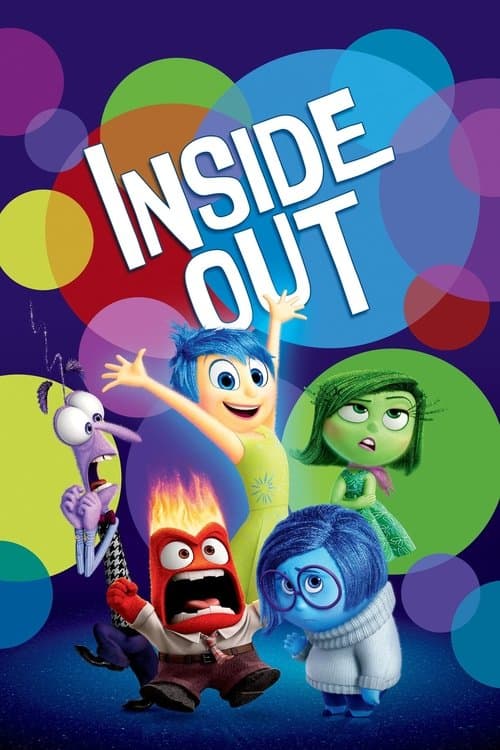
Pete Docter’s inventive and emotionally layered film explores the inner mind of Riley, an 11-year-old girl struggling to adjust to a sudden move across the country, where her emotions—Joy, Sadness, Anger, Fear, and Disgust—work together to guide her through the transition. When Joy and Sadness are accidentally swept away from Headquarters, Riley’s emotional balance begins to unravel, forcing both emotions to navigate the vast landscape of her memories and personality. As her external world grows more uncertain, the film reveals the complexity of emotional growth and the necessity of embracing difficult feelings. Blending imaginative world-building with psychological insight, Inside Out becomes a poignant exploration of identity, memory, and the role emotions play in shaping who we are.
Watch for
- The visual representation of Riley’s mind, including core memories and personality islands.
- The evolving dynamic between Joy and Sadness, which drives the film’s central emotional arc.
- The depiction of memory formation and loss, adding depth to the film’s themes of change and identity.
- The final emotional reconciliation, where the film’s message about balance and acceptance comes into focus.
Production notes
Inside Out was Pete Docter's third Pixar feature as director, after Monsters, Inc. and Up. The project originated in Docter's anxieties about his own daughter Ellie's transition into adolescence — he had noticed her becoming quieter and more withdrawn as she grew up, and the project began as an attempt to understand what was happening inside her mind. Production took over five years, with extensive consultation from psychologists Paul Ekman, Dacher Keltner, and others to inform the scientific framework of emotion characterization. The team ultimately depicted five core emotions — Joy, Sadness, Fear, Anger, and Disgust — having simplified from Ekman's longer original list. Amy Poehler voiced Joy, Phyllis Smith was Sadness, Bill Hader played Fear, Lewis Black voiced Anger, and Mindy Kaling was Disgust. Composer Michael Giacchino contributed his fourth Pixar score. Production cost approximately $175 million.
Trivia
- Pete Docter consulted with Paul Ekman, the psychologist whose research on facial expressions formed the basis of the FBI's microexpression-detection programs and inspired the TV series Lie to Me, to help shape the film's emotional framework.
- The film's depiction of Riley's emotional life uses five specific characters — Joy, Sadness, Fear, Anger, and Disgust — that mirror Ekman's research on universally-recognized emotions, with the deliberate omission of Surprise (whom Docter felt was too similar to Fear for animation purposes).
- The 'Bing Bong' character, Riley's forgotten imaginary friend, was voiced by Richard Kind and is widely regarded as one of the most genuinely heartbreaking moments in any Pixar film when he sacrifices himself in the Memory Dump.
- Pete Docter has said the film's most difficult creative decision was making Sadness the co-protagonist alongside Joy — pushing back against decades of studio convention that protagonists should drive films through positive emotion.
- The film opened the Cannes Film Festival in May 2015, screening out of competition — the second consecutive Pete Docter film (after Up in 2009) to receive the Cannes opening slot.
Legacy
Inside Out received some of the strongest reviews in Pixar history and grossed approximately $858 million worldwide, winning the Academy Award for Best Animated Feature and nominations for Best Original Screenplay (Pete Docter, Meg LeFauve, Josh Cooley) — a rare animated feature acknowledged in the screenplay category. The film's reception extended far beyond film criticism: psychologists, educators, and child-development experts have used it as a teaching tool for emotional literacy, and academic literature has analyzed its portrayal of mental life extensively. Its 2024 sequel Inside Out 2 grossed over $1.69 billion worldwide, becoming the highest-grossing Pixar film ever and introducing Anxiety to the emotional lineup. The original Inside Out's central insight — that sadness is necessary, not opposite, to growth — has been widely adopted as a framework for talking with children about emotional experience. The film entered the National Film Registry in 2025.