Cars 3
Vibe
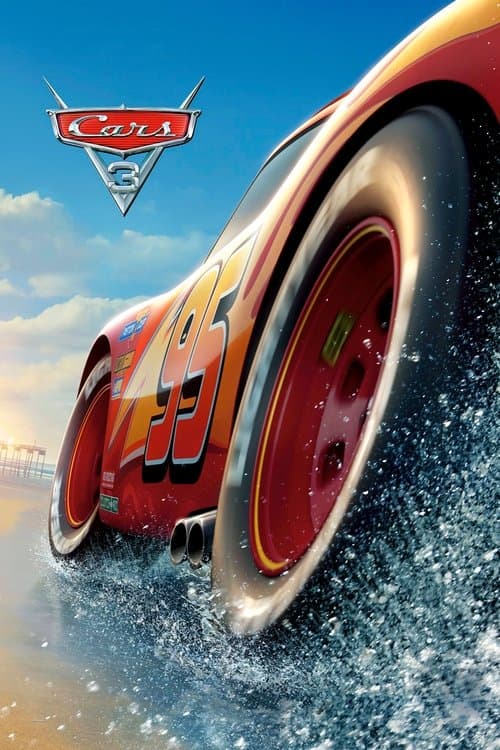
Pixar’s third installment returns to Lightning McQueen as he faces a new generation of high-tech racers that threaten to push him out of the sport he once dominated. After a devastating crash forces him to confront his own limitations, McQueen begins training under Cruz Ramirez, a young technician with untapped racing potential. As he struggles to reclaim his place on the track, McQueen must also redefine what success means at this stage of his life. Directed by Brian Fee, the film shifts back toward the reflective tone of the original, blending high-speed competition with a story about legacy, mentorship, and reinvention. Cars 3 becomes a meditation on aging, purpose, and the transition from individual achievement to guiding others.
Watch for
- Lightning McQueen’s crash and recovery, which sets the emotional and physical stakes of the story.
- The evolving dynamic between McQueen and Cruz Ramirez, shifting from trainer and trainee to something more collaborative.
- Doc Hudson’s presence through memory, reinforcing themes of legacy and guidance.
- The final race, where McQueen’s decisions reflect a redefined sense of purpose and success.
Production notes
Cars 3 was directed by Brian Fee in his feature directorial debut, after years as a Pixar story artist on Cars and Cars 2. The film deliberately stepped back from the international espionage tone of Cars 2 to return to the small-town, character-driven sensibility of the original — and to confront Lightning McQueen with the most universally relatable adversary: aging out of relevance. The team consulted extensively with retired NASCAR drivers about the experience of being supplanted by younger, more technologically advanced rivals. Owen Wilson returned as Lightning McQueen, Larry the Cable Guy as Mater, with new cast members Cristela Alonzo as Cruz Ramirez, Armie Hammer as Jackson Storm, Chris Cooper as Smokey, and Nathan Fillion as Sterling. Composer Randy Newman returned to score the film. The film cost approximately $175 million, less than Cars 2, and was deliberately framed as a return-to-form for the franchise.
Trivia
- Cars 3 deliberately framed its narrative around Lightning McQueen passing the torch to a younger, female protégée Cruz Ramirez — a generational shift unusual for a franchise built around a single male protagonist, and one that reportedly caused internal Pixar debate.
- Pixar's research team consulted extensively with retired NASCAR drivers including Richard Petty, Junior Johnson, and Cale Yarborough about the emotional experience of aging out of competitive racing; the conversations directly shaped Lightning's character arc.
- Paul Newman, who had voiced Doc Hudson in the original Cars, had died in 2008; Cars 3 used unreleased recordings from the original film's session to allow Doc Hudson to appear in flashback scenes.
- The film's antagonist Jackson Storm was deliberately designed as a 'next-generation' racer — an algorithmically-trained, data-driven rookie who beats older drivers through pure technological superiority — anticipating real-world AI-vs-human-skill debates that would dominate the late 2010s.
- Cars 3 was the first Cars film to receive 'fresh' status on Rotten Tomatoes, restoring the franchise's critical credibility after Cars 2 had ended Pixar's long streak of positive reviews.
Legacy
Cars 3 returned the franchise to creative respectability, restoring critical credibility and giving the trilogy a more thoughtful conclusion than Cars 2's espionage detour. It grossed about $383 million worldwide on a $175 million budget — solid but the lowest of the three theatrical Cars films — and received generally positive reviews. The film's themes about aging, mentorship, and generational transition gave it a more mature emotional register than its predecessors, and Cruz Ramirez's elevation to co-protagonist set the franchise on a different generational footing. The Cars franchise's merchandising and theme-park footprint has remained extraordinary regardless of theatrical reception, with Cars Land at Disney California Adventure continuing to be one of the park's most popular attractions, and Cars on the Road extending the storytelling into a 2022 Disney+ series. Among Pixar trilogies, Cars is the one with the widest gap between commercial significance and critical estimation — a franchise whose financial weight far exceeds its creative reputation.